
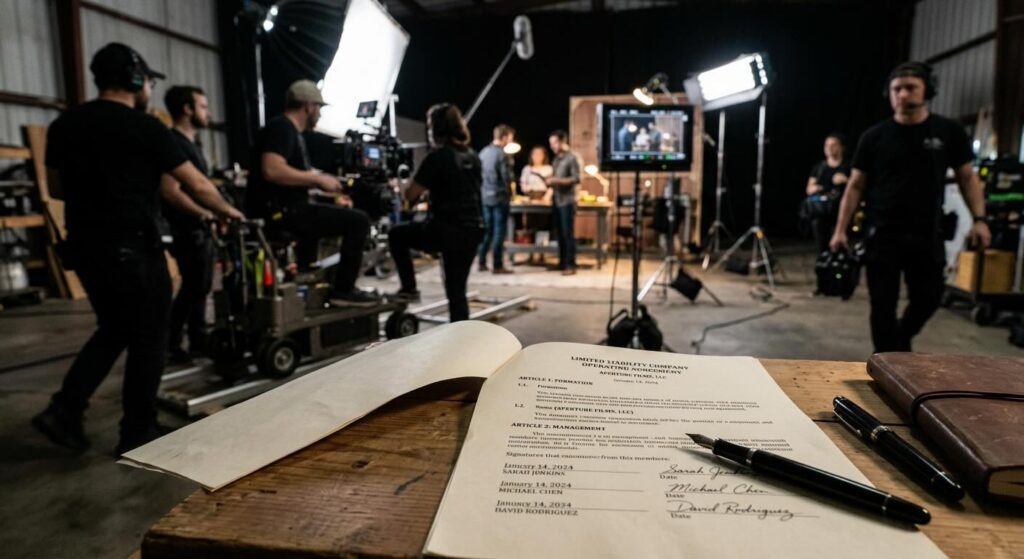
If you are preparing to produce a film, one of your early decisions is how to structure the business side of the project. Depending on your production plans, you may choose to form a single-picture LLC in New Jersey rather than produce the film through an existing company. Once you decide to create a separate company, you must determine how it will operate. You structure the LLC through its operating agreement, which establishes who owns and manages the company, how it finances the production, how it handles revenue, and what happens when the project concludes.
Weiner Law Group helps producers build companies that support their creative and business goals. Entertainment attorney Alexandru D. Aldea represents producers, writers, directors, investors, and production companies throughout the filmmaking process. Drawing on his legal experience and firsthand background as an actor and producer, Alex advises clients on entity formation, financing, operating agreements, contracts, rights and clearances, chain of title, licensing, and other production counsel matters that help projects move from development to distribution.
What Is a Single-Picture LLC in New Jersey?
If you plan to produce a film through its own company rather than an existing business, you may create a single-picture LLC in New Jersey. Producers commonly use a separate LLC for different projects to organize the production’s business affairs, including:
- Financing,
- Contracts,
- Intellectual property,
- Accounting, and
- Distribution.
Rather than operating as a general production company that develops multiple projects, a single-picture LLC exists to support a single film or other entertainment project. You may also hear attorneys, investors, or lenders refer to this arrangement as a single-purpose entity film. Regardless of the terminology, the concept is the same: the company exists to support one production rather than an ongoing slate of projects.
Once you decide to organize your production through a project-specific LLC, you need to decide how that company should operate. To do so, you typically work with an attorney to create an operating agreement establishing how the company will work.
How Do You Structure a Single-Picture LLC Through a Film LLC Operating Agreement?
You structure a single-picture LLC by deciding how the company should operate and memorializing those decisions in a film LLC operating agreement. Working with your attorney, you determine who will own and manage the company, how it will finance the production, how it will handle revenue, and how it will respond throughout the project’s lifecycle.
The decisions you make in your operating agreement determine your movie LLC structure in NJ. You can tailor the operating agreement to your production’s ownership, financing, management, and business objectives.
Who Will Own the Company?
One of the first decisions you need to make is who should own the company. Depending on your production and financing plans, your LLC’s owners, called members, may include, for example:
- One or more producers,
- An existing production company,
- Investors, or
- Another business entity.
In your operating agreement, you decide who:
- Becomes a member,
- What ownership interest each member receives, and
- What rights accompany that interest.
Those decisions often reflect what each member contributes to the project. For example, one producer may contribute the underlying rights, another may contribute development work or production services, and investors may contribute capital.
Who Will Manage the Production?
After deciding who owns the company, you determine who should manage it. Some productions benefit from having the members manage the LLC together, while others function more effectively when one or more designated managers oversee the company’s day-to-day business.
Your attorney can help you evaluate how much authority producers, investors, and other participants should have throughout the project. You may decide that managers can handle ordinary production matters independently while reserving significant business decisions, such as admitting a new investor, approving substantial budget changes, borrowing money, or selling the completed film, for member approval.
How Will the Company Pay for the Film?
Before production begins, decide how the company will obtain the resources it needs to complete the project. Members may contribute, for example:
- Money,
- Intellectual property, or
- Production services.
The company may also raise capital through:
- Investors,
- Lenders,
- Tax incentives,
- Presales,
- Crowdfunding, or
- Other financing arrangements.
As you develop your financing strategy, your attorney can help you determine how different funding sources fit together and identify legal issues that may affect the company’s ownership or operations.
How Will the Company Handle Revenue?
Before the project generates revenue, decide how the company will account for profits and losses and when members should receive distributions. Those decisions often depend on the project’s financing structure. Your attorney can help you evaluate how operating expenses, loan repayment obligations, investor recoupment, profit participation, and member distributions fit together before preparing documents that reflect the economic arrangement you select.
How Will the Company Respond If Circumstances Change?
Even well-planned productions evolve. A new investor may join the project, financing may change, a producer may withdraw, or a member may:
- Die,
- Become incapacitated, or
- Seek to transfer an ownership interest.
In your operating agreement, you decide in advance how the company will handle those events.
What Happens After the Project Ends?
Your operating agreement often also addresses how the company will conclude its work. Even after filming ends, the LLC may continue:
- Receiving distribution revenue,
- Administering licenses,
- Maintaining production records, or
- Satisfying contractual obligations.
Your attorney can help you determine when the company should complete its purpose and how it should handle any remaining assets, liabilities, and responsibilities.
How Does Your Film LLC Operating Agreement Support the Production?
As the production moves from development to filming and eventually distribution, the company enters legal relationships with writers, investors, cast members, crew members, vendors, licensors, distributors, and others. Your operating agreement provides the framework that allows the company to manage those relationships consistently throughout the project.
When the company enters agreements to acquire rights, secure financing, retain creative personnel, license intellectual property, or distribute the completed project, those agreements operate within the ownership and management structure established by the operating agreement.
Structure Your Film Company with a Clear Operating Agreement
Every production has its own financing, ownership, and creative goals. Your operating agreement should reflect those decisions. Weiner Law Group advises producers throughout the planning process, helping you evaluate entity structures, prepare film LLC operating agreements, and coordinate legal documents to support each production.
Contact us online or call 973-403-1100 to discuss structuring your single-picture LLC in New Jersey.