
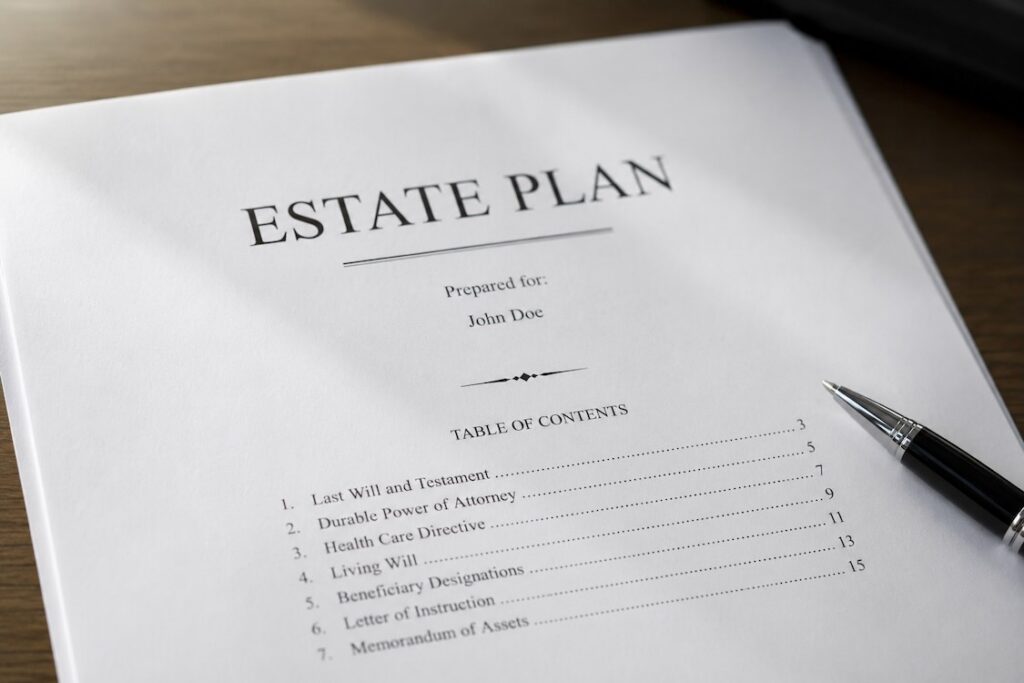
Property division, alimony, inheritance rights, and estate plans often become points of conflict when a marriage ends. While no one enters a marriage expecting a divorce, planning ahead can help reduce disputes and protect your financial future. An important part of the plan is estate planning for asset protection in a divorce.
A strong estate plan is not just about what happens after death. It can also help clarify ownership rights, preserve family wealth, and reduce uncertainty if a marriage ends. At Weiner Law Group, our top-rated law team can help you understand the connection between estate planning and divorce, allowing you to make informed decisions that protect your interests and your loved ones.
Why Is Estate Planning During Marriage Important?
Many people think estate planning only involves writing a will. In reality, a complete estate plan can include:
- Wills,
- Trusts,
- Beneficiary designations,
- Powers of attorney, and
- Premarital agreements.
These tools can play an important role in estate planning for asset protection in a divorce. When documents are properly prepared and regularly updated, they can reduce confusion and minimize disputes over property ownership.
How Does Property Division Work in a New Jersey Divorce?
New Jersey follows the principle of equitable distribution, meaning that when couples divorce, their property is divided fairly, but not necessarily equally. Courts consider many factors when dividing property, including:
- The length of the marriage,
- Each spouse’s income and earning capacity,
- Contributions made during the marriage,
- The standard of living established during the marriage, and
- The value of marital and separate assets.
Because property division can become complicated, many people seek pre-divorce asset protection strategies long before they ever contemplate divorce.
How Alimony Can Affect Long-Term Financial Security
Alimony is another issue that can create significant disputes during a divorce. New Jersey courts may award alimony based on factors such as:
- The length of the marriage,
- Each spouse’s financial circumstances,
- Each spouse’s earning ability and employability,
- Each spouse’s health and age,
- Contributions made to the marriage, and
- What parenting responsibilities each spouse have.
Alimony obligations can last years or decades and have lasting effects on both spouses. Proper financial planning and estate planning can help individuals understand their obligations and prepare for future financial needs.
Can Premarital Agreements Protect Wealth Before Marriage?
A properly drafted premarital agreement can help couples define:
- How they will divide their property if they break up or if one spouse dies,
- Which assets will remain separate property that is not subject to division,
- Each spouse’s rights and responsibilities regarding property,
- Expectations regarding making a will or trust,
- Terms for spousal support or alimony, and
- Rights relating to business interests.
Premarital agreements often reduce uncertainty because both parties understand their rights before the marriage begins and can prepare accordingly.
This type of agreement can be one of the most effective tools for protecting your wealth before marriage. An agreement can also help you and your spouse dictate how you will use tools such as wills or trusts to support your family after you pass.
What Happens If You Die Without an Estate Plan?
Estate planning is one of the most important pre-divorce asset protection strategies because divorce and inheritance laws often intersect. When a person dies without a valid willhttps://www.weiner.law/nj-law-blog/intestate-succession-when-there-is-no-will/, New Jersey’s intestate succession laws determine who inherits property. Depending on the family situation, a surviving spouse, children, parents, or other relatives may inherit portions of the estate. However, former spouses and step-children are left out of the process—this may or may not be your intention.
Without a will, family members may disagree about how assets should be distributed during probate (a formal court proceeding that determines how to divide estate assets after your death). These disputes can become even more complicated after a divorce or when blended families are involved. Creating a valid estate plan can help ensure your property passes according to your wishes instead of default state rules.
How Can Wills Help Prevent Family Conflict?
A will allows you to clearly state how your property should be distributed after death. A properly drafted will can:
- Identify beneficiaries (including a former spouse or step-children),
- Name an executor,
- Provide instructions for asset distribution, and
- Address family concerns before disputes arise.
Creating an estate plan that considers a former spouse’s interests can help you negotiate more favorable terms in a premarital or separation agreement to avoid asset disputes in a divorce and make disagreements easier to avoid. If your spouse knows that you will financially support them or their children after your passing, they may be less eager to fight you in divorce court.
Why Are Trusts a Powerful Asset Protection Tool?
Trusts can provide additional flexibility and protection that a will alone may not offer, and a trust can also be among the best pre-divorce asset protection strategies.
Trust benefits may include:
- Greater control over asset distribution,
- Privacy,
- Probate avoidance,
- Protection for children from prior relationships, and
- Long-term wealth preservation.
Assets you put in a trust before marriage may not be subject to property division in a divorce. You and your spouse may agree to set aside funds in a trust to cover child support or spousal support obligations so that you don’t have to fight about those matters in a divorce court.
How Does Divorce Affect Wills and Inheritance Rights?
Many people are surprised to learn that divorce can affect existing estate planning documents.
Under New Jersey law, a divorce generally revokes provisions that benefit a former spouse under a will or other governing instruments unless a court order, agreement, or governing document provides otherwise. A divorce may also sever survivorship interests in jointly held property.
However, divorce does not automatically update every estate planning document. Individuals and spouses alike should review beneficiary designations, trusts, and other assets after major life events. Failing to update your estate plan can create confusion and unintended consequences for your loved ones.
How to Avoid Asset Disputes in Divorce
There is no single solution that prevents every divorce dispute. However, proactive planning can significantly reduce the likelihood of conflict.
Some effective strategies include:
- Creating a comprehensive estate plan,
- Maintaining clear records of separate and marital property,
- Using premarital agreements when appropriate,
- Reviewing beneficiary designations regularly,
- Updating wills and trusts after major life events, and
- Seeking legal guidance before disputes arise.
Taking these steps early can place you in a stronger position to protect your assets and avoid unnecessary litigation.
Work with Our Experienced Attorneys
Divorce and estate planning are closely connected. Decisions made today can affect your finances, your family, and your legacy for years to come. Whether you are considering marriage, reviewing an existing estate plan, or navigating a divorce, a proactive plan can help protect what matters most.
At Weiner Law Group, our top-rated attorneys work closely with clients to develop practical estate planning for asset protection in a divorce. We take the time to understand your goals and create solutions designed to protect your property, reduce conflict, and provide peace of mind for the future. Please call 973-403-1100 or reach out online to schedule an appointment.
Legal References Used to Inform This Page
To ensure the accuracy and clarity of this page, we referenced official legal and other resources during the content development process:
- Equitable distribution criteria, 2A N.J.S.A. § 34-23.1 (2025).
- Alimony, 2A N.J.S.A. § 34-23 (2025).
- Premarital agreements, 37 N.J.S.A. § 2-34 (2025).
- Enforcing premarital agreements, 37 N.J.S.A. § 2-38 (2025).
- Powers of attorney, 46 N.J.S.A. § 2B-8.2 (2025).
- Monmouth County Surrogate’s Office, “A Citizen’s Guide to Wills, Estates and Probate” (2022).
- Intestate share of surviving spouse, civil union partner, or domestic partner, 3B N.J.S.A. § 5-3 (2025).
- Intestate shares of heirs other than surviving spouse, 3B N.J.S.A. § 5-4 (2025).
- Devolution of property upon death, 3B N.J.S.A. § 1-3 (2025).
- Identifying devise of tangible personal property by separate writing, 3B N.J.S.A. § 3-11 (2025).
- Creating a trust, 3B N.J.S.A. § 31-18 (2025).
- Testator’s intention and rules of construction applicable to wills, trusts, and other governing instruments, 3B N.J.S.A. § 3-33.1 (2025).
- Revocation of probate and non-probate transfers by divorce or annulment, 3B N.J.S.A. § 3-14 (2025).
- Tenancies in common and joint tenancies, 46 N.J.S.A. § 3-17 (2025).